
The Day I Became a Better Teacher!
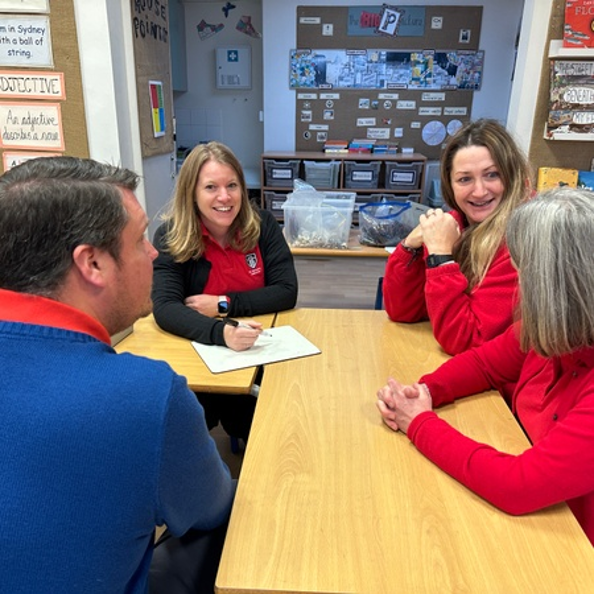
A leadership journey into coaching, collaboration and professional trust.
St. Michael’s Primary School, Aldbourne
SITUATION
On becoming head, Jude Arkwright questioned how to help teachers get even better. The Sutton Trust report highlighted frameworks for great teaching and the importance of professional development. Barriers included competing priorities, performance management pressures, and peer observation seen as threatening rather than developmental.
THEORY
The guiding belief: every teacher can improve because they can always be even better (Dylan Wiliam). Coaching triplets offered a non-directive strategy. Rosenshine’s Principles and WalkThrus provided the theoretical underpinning: if teachers practised evidence-based strategies together, then consistent improvement followed, so that professional trust and shared expertise grew.
ACTION
Leaders shifted performance management to performance development, setting one shared objective: improve the quality of teaching. Weekly learning groups and coaching triplets became the foundation. To ensure sustainability, they designed a three-week cycle:
Week 1 – coaching groups met to reflect, plan, and schedule focus areas.
Week 2 – teachers rehearsed strategies in class, often using WalkThrus as reference points.
Week 3 – drop-in observations provided structured peer feedback.
Teaching and learning clusters were created to align coaching with school priorities. St Michael’s focused on two techniques in particular: Questioning and Feedback and Practice and Retrieval. These clusters allowed teachers to explore techniques deeply, building a shared pedagogical language. Live demonstrations from the WalkThrus team gave staff clear representations of practice, reinforcing the focus on inclusion, formative assessment, and reflective practice. Over time, coaching became embedded as a culture of trust and ownership.
RESULTS
WalkThrus techniques became embedded. Peer observation shifted from feared to welcomed, with teachers proactively requesting coaching. Staff developed a shared pedagogical language, inclusion improved, and students demonstrated stronger learning behaviours and retention. Leadership saw immediate, sustainable impact on the quality of classroom practice.
TAKE-AWAYS
Insight: time and trust are essential for sustainable improvement. Best practice: coaching cycles embed professional growth when aligned with staff needs.
Reflection: brave leadership and collaboration built a culture of risk-taking.
Recommendation: use evidence-based tools to focus on teaching quality and celebrate improvement as a shared achievement.
PROFILE
Case story from St Michael’s Primary, Aldbourne. Headteacher: Jude Arkwright. Deputy Headteacher: Ben Everitt. The school built its approach on Sutton Trust research, Dylan Wiliam’s principle of continuous improvement, Rosenshine’s Principles, and WalkThrus, developing a culture of coaching, collaboration, and professional trust.
Written by
Jude Arkwright, Head Teacher